
Chemical Peels Melbourne
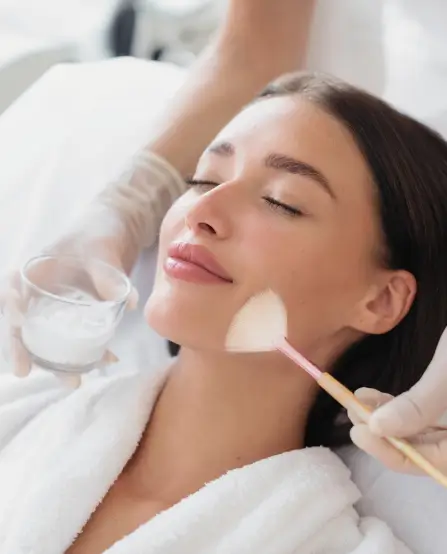
Resurfacing Treatments for Tone, Texture and CongestionChemical peels are professional skin-resurfacing treatments that apply chemical solutions to lift built-up dead skin cells and encourage even skin renewal. They’re often used to help with the visible signs of ageing and damage on the face, hands, neck, and chest.
At Luxe Lips, every peel is performed by AHPRA-registered nurses across our Camberwell, Moonee Ponds and Brighton clinics. Treatment begins with a skin assessment to confirm a peel is right for your concern and barrier health before anything is applied.
2,050+
FIVE-STAR REVIEWS
ACROSS ALL MELBOURNE SITES50,000+
TREATMENTS PERFORMED
24/7
Real person chat
3
MELBOURNE CLINICS
Skin Texture, Pigmentation & Post-Acne Marks
Chemical peels are designed to improve the appearance of surface-level skin concerns, such as uneven tone, rough texture and post-acne marks, by controlled exfoliation and skin renewal. Many patients come in with a mix of concerns (for example, congestion plus pigmentation), and it’s common to feel unsure which peel is “right” or how much downtime to expect.
Skin concerns like dullness, visible congestion, uneven tone and post-acne marks often relate to a combination of:

CELL TURNOVER SLOWING
dead skin cells build up and scatter light unevenly
INFLAMMATION
e.g., from acne, that can leave lingering redness or pigment
SUN EXPOSURE
contributing to uneven pigmentation
TEXTURE CHANGES
from previous breakouts or long-term congestion
A professional chemical peel functions through a controlled process called chemexfoliation, which induces a targeted chemical injury to specific layers of the skin to stimulate a natural healing response. When the exfoliating agents (often alpha hydroxy acids and/or beta hydroxy acids) are applied they interact with the components of the skin barrier to lift surface build-up and help your skin shed evenly over time. This may help improve the appearance of tone and texture. Clinical studies suggest chemical peeling agents can improve the appearance of acne and pigment-related concerns when appropriately selected and performed.
The “best” peel is the one that matches your skin’s tolerance, your concern, and your recovery window, not necessarily the strongest peel available.
Chemical Peel Options (Tailored to Your Concern)
Chemical peels are not one single treatment, they’re a category of professional peel options selected based on your concern (tone, congestion, texture) and your skin’s tolerance. Patients often worry about choosing the “wrong” peel, over-peeling, or ending up with redness that lasts longer than expected, which is why we match the peel to your skin and your calendar.
Below are common option “families” we may discuss during consultation. Exact products and strengths are confirmed clinically and may change over time as your skin adapts.

Common presentation: Many patients seeking brightening notice patchy tone, sun-related freckling, or lingering post-inflammatory pigmentation after breakouts.
How it works: Brightening-focused peels are designed to lift superficial pigment and improve the look of uneven tone by accelerating the shedding of pigmented surface cells.
 Sun-exposure history and pigmentation triggers Pigmentation type (post-inflammatory, sun-related, hormonal) Skin barrier resilience and any recent active skincare SPF discipline and aftercare consistency Sensitivity and tolerance for conservative dosing
 - “Will this make my pigmentation worse?”
- “How much peeling will I have?”
- “Can I wear makeup afterwards?”
- “Is it safe if I’m prone to sensitivity?”
- May help soften the appearance of uneven tone
- Skin may look brighter as surface build-up reduces
- A series is often discussed for stubborn pigment (varies by skin type)
- Outcomes depend on sun exposure and home care consistency
- Sun protection is essential (especially in Melbourne’s UV)
- We screen for recent tanning, sunburn or barrier impairment
- Pigmentation-prone skin benefits from conservative dosing and spacing
- Combination plans may be considered (e.g., light-based options) after assessment
- Uneven tone with minimal downtime preference
- Patients able to follow strict SPF and aftercare guidance
- Those wanting a conservative first step before higher-intensity options
Common presentation: Patients often describe persistent congestion, blackheads, an oily T-zone, or breakouts that don’t settle with over-the-counter skincare.
How it works: Clarifying peels are selected to support pore decongestion and reduce surface oil build-up by exfoliating within the pore lining and improving shedding.
Severity and pattern of breakouts (mild congestion vs cystic acne) Current acne-management routine and active ingredients Skin barrier health and irritation history Tendency toward picking or aggressive exfoliation Whether medical/prescription management may be more appropriate - “Will a peel trigger a breakout?”
- “Is it painful?”
- “Will I be red for days?”
- “Can I keep using my acne products?”
- May help improve the appearance of congestion over time
- Some patients notice a short-term “purge” depending on the peel type and routine
- Skin can feel smoother as surface build-up reduces
- A plan may include barrier support between sessions
- We may pause certain active skincare pre/post peel to reduce irritation
- Picking and aggressive exfoliation increases irritation risk
- If acne is severe/cystic, we may refer you for medical management
- Combination treatments may be discussed depending on sensitivity
- Oily or combination skin with visible congestion
- Patients wanting a structured, clinician-guided plan
- Those who can commit to simple, consistent aftercare
Common presentation: Many patients notice uneven texture, roughness, enlarged-looking pores, or post-acne marks that sit “on the surface” rather than deep scarring.
How it works: Smoothing-focused peels aim to refine the outermost layers of the skin to improve the appearance of texture irregularities and dullness.
Type of texture concern (rough, dull, enlarged-looking pores) Depth of post-acne marks (surface vs deeper scarring) History of eczema, dermatitis, or cold sores Tolerance for visible flaking and event-planning needs Whether deeper resurfacing modalities may be more appropriate - “Will I peel in sheets?”
- “How long until I see a difference?”
- “Can I exercise afterwards?”
- “Will it thin my skin?”
- May help skin feel smoother and look more even
- Mild-to-moderate flaking can occur depending on peel type
- Results are gradual and vary between individuals
- A series may be recommended for persistent texture concerns
- If you have active eczema/dermatitis, peels may not be suitable until settled
- We assess for a history of cold sores if treating around the mouth
- We plan around events to minimise visible flaking
- Deeper texture concerns may need other modalities (discussed in consult)
- Dull, rough, uneven-feeling skin
- Post-acne marks with minimal downtime preference
- Patients wanting a conservative “reset” alongside home care
Your Consultation Covers All of These Options
Many patients begin with a conservative, superficial peel and adjust over time based on skin response, but your best starting point is individual. We’ll assess your suitability and discuss a plan together with no commitment required.
Your Chemical Peel Consultation and Treatment Journey
At Luxe Lips, your journey starts with a consultation, so we can confirm what’s appropriate for your skin and what’s not. Many patients have understandable concerns about irritation, unexpected reactions or over-peeling, or choosing an option that’s too aggressive for their skin barrier.

What we cover in your consultation
YOUR MEDICAL HISTORY
any relevant skin diagnoses
YOUR CURRENT SKINCARE
including actives like retinoids, acids and vitamin C
BARRIER HEALTH AND SENSITIVITY SCREENING
how easily you flush, peel or react
YOUR MAIN CONCERNS
tone, congestion, texture, post-acne marks
YOUR PREFERENCES AND RECOVERY WINDOW
work, events, exercise, sun exposure
A TAILORED PLAN
peel type, frequency, and supportive home care guidance
Most concerns about chemical peels come down to preparation and aftercare, and that’s exactly what we guide you through. Patients commonly ask what to stop using beforehand, how much they might peel, and what to do if their skin feels tight or irritated afterwards.
Before Your Appointment
WHAT TO BRING & KNOWMany patients present feeling unsure whether they should stop their usual skincare, whether they need to avoid sun, or whether their skin is “too sensitive” for a peel. The safest approach is to treat your appointment as a clinical skin assessment first, then plan timing around your schedule and skin barrier.
Arrive with a clean face if possible (no heavy makeup)
Tell us about upcoming events, travel, or high sun exposure
Your consultation takes ~30 minutes (treatment timing varies if performed same day)
During Treatment
WHAT TO EXPECTPatients often worry that a peel will be painful or that they won’t be able to tolerate the sensation. In practice, most professional superficial peels feel like warmth, tingling or a temporary sting, and we monitor comfort throughout.
Explain each step and what sensations are normal
Check in regularly and adjust pacing if needed
Use comfort measures (including complimentary topical anaesthetic where appropriate)
Keep the plan conservative and controlled
Aftercare & Follow-Up
WHAT HAPPENS NEXTPatients commonly ask what is “normal” afterwards, especially if they notice tightness, dryness, flaking, or temporary redness. Your care continues after your appointment with ongoing support from our clinical team, including written guidance and access to 24/7 aftercare.
Keep skincare gentle and bland for the first few days (as advised)
Avoid picking, scrubbing, or exfoliating flaking skin
Use broad-spectrum SPF daily and minimise direct sun exposure
Pause strong actives (retinoids/acids) until your clinician advises reintroduction
How Sun, Inflammation and Ageing Affect Your Skin
Skin concerns like pigmentation, congestion and texture tend to change gradually over time, influenced by UV exposure, inflammation and natural cell turnover. Clinically, pigment can become more noticeable with cumulative sun exposure, while post-acne marks may persist longer if breakouts continue or the skin barrier stays inflamed. Research also suggests that epidermal turnover slows with age, which can contribute to dullness and uneven texture.

Research suggests that controlled chemical exfoliation can support smoother-looking skin and more even tone when appropriately selected and spaced. A consultation helps you understand where you sit in this timeline, what’s contributing to your concern, and whether a conservative peel plan is suitable now, or whether barrier repair, skincare changes, or another modality should come first.
CLIENT REVIEWS
What our clients say


Related Concerns That May Need More Than a Chemical Peel
A chemical peel works on the surface layer of the skin, so it may soften the early or mild signs of ageing and damage, but not resolve them once they sit deeper in the skin. Where a concern is more established, there are alternatives for treatment, sometimes alongside a peel and sometimes in its place.
Pigmentation and Dark Spots
Surface pigment often responds to peels, but deeper or hormonal pigmentation sits below the reach of exfoliation and needs a targeted plan to treat safely and avoid worsening it.
Acne Scarring
Peels can help with post-acne marks. Deep acne scarring is a change in the skin's texture and structure, and improving it calls for treatments that work deeper than a peel can reach.
Vascular Concerns
Redness, flushing and visible capillaries come from blood vessels near the skin's surface. These are better addressed with treatments made for vascular concerns, where peels are avoided.
3 accessible clinic locations across Melbourne
All locations
Camberwell
1172 Toorak Rd, Camberwell VIC 3124, Australia
+61 477 441 340 Book an in-clinic consultationMoonee Ponds
30-32 Holmes Rd, Moonee Ponds VIC 3039, Australia
+61 477 441 340 Book an in-clinic consultationHave Questions? Your Consultation Is a Good Place to Start.
Frequently Asked Questions
SAFETY & SUITABILITY
Are chemical peels safe? 
Who is not a good candidate for a chemical peel?
What are the side effects of a chemical peel?
RESULTS & TIMELINE
How long does it take to see results from a chemical peel?
How long do chemical peel results last?
Can you see results after 1 peel?
AFTERCARE & LOGISTICS
Is there downtime after a chemical peel?
Can I exercise after a chemical peel?
How much does a chemical peel cost at Luxe Lips?
WHERE TO START
Which chemical peel is best?
What’s a common starting point at Luxe Lips?
MYTHS, WORRIES & 'WHAT IF'
I’ve read scary stories online – can a chemical peel make skin worse?
Do chemical peel facials destroy your skin barrier?
What if I don’t like my result?
COMPARISON
Chemical peels vs at-home peels – what’s the difference?
Send an Enquiry
Have a question or want to learn more? We'd love to hear from you.