
Gummy Smile Treatment Melbourne
Lowering the Lift of the Upper LipSeveral muscles lift the upper lip when you smile. The levator labii superioris alaeque nasi, beside the nose, lifts the centre, and the zygomaticus muscles, running from the cheekbone, pull the corners up and back. When these pull harder than usual, more gum shows above the teeth. Muscle activity treatment is designed to soften the pull of whichever muscles are driving it, to encourage the lip to sit lower over the gums as you smile. Where the teeth, gums or jaw are the cause, a referral is discussed.
Your AHPRA-registered nurse asks you to laugh as well as smile, because a posed smile often hides how high the lip lifts. Gum display is then measured above the front teeth and the side teeth, which shows where the lift is coming from. Treatment is available at our Moonee Ponds, Brighton and Camberwell clinics.
2,050+
FIVE-STAR REVIEWS
ACROSS ALL MELBOURNE SITES50,000+
TREATMENTS PERFORMED
24/7
Real person chat
3
MELBOURNE CLINICS
Understanding a Gummy Smile
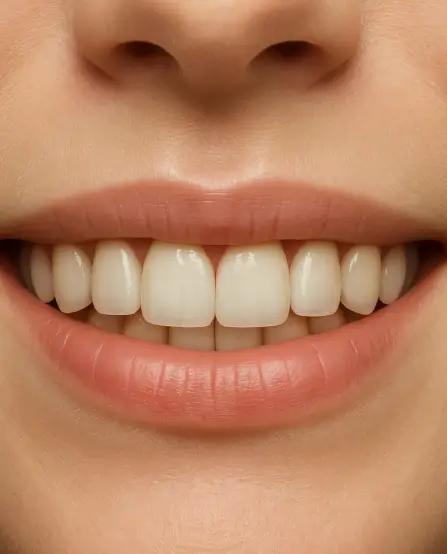
In a full smile, the upper lip usually rises to around the gum line, and a little gum above the front teeth is often regarded as normal. A smile reads as gummy when a band of gum shows beyond that. Four things set how much gum a smile reveals:

LIP MOVEMENT
how high the elevator muscles lift the lip
LIP LENGTH
a short upper lip covering less of the gum
GUM AND TOOTH SIZE
gum covering more of each tooth than usua
JAW AND BITE
an upper jaw that has grown longer downward
Only lip movement responds to muscle activity treatment. If your teeth look short even at rest, or gum shows with only a gentle smile, the teeth, gums or jaw are often involved, and a dentist, periodontist or orthodontist may be the better place to start.
Gummy Smile Treatment by Cause
A gummy smile tends to become less noticeable with age, as the upper lip slowly lengthens and the elevator muscles lift it less. Where the gum shows, whether at the centre, the sides or the full width, points to which muscles are involved.
In an anterior gummy smile, gum shows above the front teeth while the sides of the smile stay covered. The levator labii superioris alaeque nasi, a narrow muscle running down the side of the nose, lifts the centre of the lip sharply, so the lip line forms an upside-down V as you smile. It’s often most noticeable when laughing.
Muscle activity treatment is placed at the base of the nose on each side, where this muscle meets the lip. It is designed to soften the lift at the centre, to encourage the middle of the lip to sit lower over the front teeth as you smile, while the corners keep their usual movement.
 Gum display above the front teeth at full smile Lip line shape, V-shaped or level, as you smile Upper lip length at rest, nose to lip border Any difference in lift between left and right How far the nostrils flare as you smile broadly
- “Will my nose look different?” This muscle also lifts the edges of the nostrils, so they may flare a little less when you smile. The shape of the nose itself doesn’t change.
- “Will my top lip look longer?” As the centre sits lower over the teeth, the lip may look slightly longer when you smile. At rest it looks the same.
- “Will my smile look less happy?” The corners are lifted by other muscles, which aren’t treated here, so the width and shape of your smile should stay your own.
- “Will the fold beside my nose change?” The same muscle deepens that fold as you smile, so the fold may also look a little softer on movement.
- Less gum may show above the front four teeth
- The lip centre may sit lower when you smile
- The change tends to settle over about two weeks
- Effects usually wear off over several months
- An uneven lift may need a plan for each side
- The upper lip may feel slightly heavy at first
- A short upper lip can limit how much changes
- Too much may make the lip look long on smiling
- Gum showing mostly above the front teeth
- Smiles where the lip rises in a V shape
- Teeth that look normal length at rest
In a posterior gummy smile, the centre of the lip covers the front teeth, but gum shows above the side teeth as you smile. The zygomaticus muscles run from the cheekbone to the corners of the mouth. When they pull hard, they draw the corners up and back towards the cheekbones, lifting the lip off the gums at the sides.
Muscle activity treatment is placed further out along the cheek line, where these muscles meet the lip. It is designed to soften the pull on the corners, to encourage them to sit lower as you smile. Because these muscles also give the smile its width and lift, placement is mapped carefully while you laugh and talk.
Gum display above the side teeth at full smile How far the mouth corners pull up and back Smile width and the space beside the side teeth Any difference in pull between left and right How the cheeks lift and bunch as you laugh - “Why does gum only show at the sides?” The cheek muscles lift the corners higher than the centre, so gum appears above the side teeth first.
- “Will my cheeks look different when I smile?” The same muscles draw the cheeks up, so they may lift a little less on a full smile.
- “Will it change my eye smile?” The crinkle at the outer eyes comes mostly from a different muscle, which isn’t treated here.
- “Will it affect how I talk?” The corners move as you speak, so they may feel slightly different for the first week or two.
- Less gum may show above the side teeth on smiling
- The corners may sit a little lower on smiling
- The effect tends to build over the first two weeks
- Laughing may feel a little different at first
- A flatter smile is possible due to placement
- An uneven pull may need a plan for each side
- A strong cheek lift can limit how much changes
- Placement is mapped while you laugh and talk
- Gum showing mostly above the side teeth
- Corners that pull up and back when smiling
- A centre lip that covers the front teeth
In a mixed gummy smile, gum shows above the front and side teeth at once, so a band of gum runs across the full width of the smile. The muscle beside the nose and the cheek muscles both lift harder than usual, and in a broad laugh the whole upper lip can rise clear of the gums.
Muscle activity treatment is placed at the base of the nose and out along the cheek line. It is designed to soften the lift at the centre and the corners together, to encourage the whole lip to sit lower over the gums. With more treatment points around the mouth, treatment is often staged: the centre first, then the sides at review, once the first change has been seen.
Gum display above front and side teeth together Whether the centre or the sides lift higher Upper lip length and gum coverage while at rest How the smile changes from a grin to a laugh Tooth length, to check for a gum or jaw cause - “Why not treat everything in one visit?” More treatment points around the mouth raise the chance of the smile changing more than expected, so the centre is often treated first and the sides added at review.
- “Will my smile still look like mine?” Much of its width and character comes from the cheek muscles, so the sides are planned to keep as much of that as possible.
- “Will I need more treatment than a centre-only gummy smile?” More points are usually needed across the lip, and your plan reflects that.
- “Could my teeth be part of it?” Gum showing across the full width, even with a gentle smile, can also point to the gums or jaw, and that’s checked before any plan.
- Less gum may show across the full width of the smile
- Change may come in two steps, centre then sides
- The upper lip may feel a little heavier at first
- Each step is reviewed before the next is planned
- Staging lowers the chance of an overly flat smile
- Treatment at the sides can flatten the smile
- Gum or jaw factors may sit alongside the muscle
- Speech and sipping are checked between steps
- Gum showing above the front and side teeth
- Smiles where the whole lip lifts off the gum
- Those happy to stage treatment over visits
Some gummy smiles have nothing to do with how far the lip lifts. The gum may not have moved fully back off the teeth after they came through, so the teeth look short. The upper lip may be short for the teeth beneath it. Or the upper jaw may have grown longer downward, so gum shows even with a gentle smile.
Muscle activity treatment can’t change tooth length, gum position or jaw size. Where one of these is the main cause, your nurse explains what’s been found and refers you on: to a periodontist for gum contouring, an orthodontist for tooth position, or a maxillofacial surgeon where the jaw is involved. Where muscle pull also plays a part, it can be discussed once the structural concerns have been addressed.
Tooth length and shape along the gum line Gum display with a gentle and a full smile Upper lip length against the teeth below it Bite, jaw position and facial height in profile Dental, orthodontic and gum health history - “Why can’t muscle treatment fix this?” It changes how far the lip lifts, but it can’t change how long the teeth are, where the gum sits or the size of the jaw.
- “What is gum contouring?” A periodontist reshapes a small amount of gum, and sometimes bone, so more of each tooth shows. It’s done in a dental setting.
- “Do I need jaw surgery?” Only where the upper jaw itself is long. A maxillofacial surgeon assesses this, often alongside an orthodontist.
- “Is a gummy smile a health problem?” Usually not, but swollen or overgrown gums can be, so a dental check is worthwhile.
- A clear explanation of what is causing it
- A referral to the right dental specialist
- A muscle option discussed if it plays a part
- No treatment offered here that will not help
- Gum health is checked before cosmetic work
- Orthodontic work can change gum display
- Surgical options carry a longer recovery
- A short upper lip cannot be lengthened here
- Teeth that look short even with lips at rest
- Gum showing with only a gentle smile
- Anyone who wants an honest answer first
Finding the Cause Before Any Treatment
Muscle activity treatment only helps where the lip is lifting too far, so the first job is working out whether that’s what you’re seeing. If your nurse finds the teeth, gums or jaw are the main cause, you’ll be told at your consultation and pointed to the right specialist, with nothing booked here. There’s no obligation to go ahead.
From Smile Assessment to Review
Your dental history matters more here than anywhere else on the face. Recent orthodontics, crowns, veneers or gum surgery can all change how much gum shows, so they’re recorded before muscle treatment is considered.

What we cover in your consultation
MEDICAL HISTORY SCREENING
pregnancy, medications and muscle conditions
DENTAL HISTORY
braces, crowns, veneers and any gum treatment
SMILE MAPPING
gum display at rest, smiling and laughing
MUSCLE PATTERN
which elevators lift the lip, centre or sides
LIP AND TEETH
upper lip length measured against the teeth
YOUR PLAN
treatment points, staging or a dental referral
Treatment for the centre or the sides is a single appointment, while a mixed gummy smile is often staged across two visits with a review in between.
Before Your Appointment
WHAT TO BRING & KNOWGum display is easiest to judge on a natural smile, so come ready to laugh and talk. If you have dental work planned, tell us when you book, because the order of treatments matters.
Bring any dental reports or X-rays you have
List braces, crowns or veneers, with dates
Bring a candid photo of yourself laughing
Mention events, as the change builds over weeks
Allow 30 minutes for your consultation
During Treatment
WHAT TO EXPECTYour nurse asks you to smile and laugh again, then marks the treatment points beside the nose, along the cheek line or both, depending on where your gum shows.
You sit upright, facing your nurse throughout
Points are marked while you smile broadly
We apply complimentary topical anaesthetic (numbing cream) where appropriate
A cool pack may help settle any tenderness
Aftercare & Follow-Up
WHAT HAPPENS NEXTFor the rest of the day, keep pressure off the points beside your nose and along your cheeks so the treatment settles in the muscles it was placed for.
Avoid rubbing your nose or cheeks today
Hold off facials and face massage for a day
Stay upright for a few hours afterwards
Contact us if anything feels unexpected or you’re unsure
Treatment Is a Process, Not a Single Decision
How much gum shows changes over the years. The upper lip slowly lengthens and sits lower over the teeth, so the same smile tends to show less gum at 50 than at 20.

A study of 265 adults aged 19 to 60 measured gum display in a posed smile. Women aged 19 to 24 showed an average of 0.48 mm of gum above the front teeth, and by 45 to 60 the lip covered 0.99 mm of the tooth instead. Men showed less gum at every age, and the change with age was steeper.
A gummy smile in your twenties may soften gradually without treatment, while one that persists into your forties is more likely to have a structural cause or a strong muscle pull behind it. Your consultation looks at where your smile sits now.
CLIENT REVIEWS
What our clients say


Explore More Treatment Options
The elevators work alongside the muscles around them. The orbicularis oris controls how far the lip edge rolls in, the muscle that lifts the centre of the lip also deepens the fold beside the nose, and below the mouth corners the depressor muscles pull the lip the opposite way.
Lip Flip Treatment
The ring muscle that rolls the upper lip in, hiding its pink on smiling
learn moreNasolabial Fold Treatment
The muscle that lifts the lip centre also deepens the fold by the nose
learn morePrejowl Sulcus Treatment
The groove below the mouth corners, where the lip depressors pull down
learn more
Wrinkle treatments
Muscle activity treatment for the crow’s feet that crease as you laugh

Facial Contouring
Planning that balances the cheeks, chin and jawline around your smile

Morpheus8
Radiofrequency microneedling that may firm creased skin by the mouth
Rejuran
Polynucleotides used to support repair in thin skin around the mouth
Fotona Luxe Rejuv
Laser that gently heats the skin and may soften lines around the mouth
3 accessible clinic locations across Melbourne
All locations
Camberwell
1172 Toorak Rd, Camberwell VIC 3124, Australia
+61 477 441 340 Book an in-clinic consultationMoonee Ponds
30-32 Holmes Rd, Moonee Ponds VIC 3039, Australia
+61 477 441 340 Book an in-clinic consultationHave Questions? Your Consultation Is a Good Place to Start.
Frequently Asked Questions about Gummy Smile Treatments in Melbourne
SAFETY & SUITABILITY
Can I have gummy smile treatment while wearing braces? 
What could go wrong with gummy smile treatment?
Is gummy smile treatment suitable for teenagers?
RESULTS & TIMELINE
How much less gum will show?
When will I notice a difference?
Will my gummy smile come back?
AFTERCARE & LOGISTICS
Can I wear make-up after treatment?
Can I lie down after treatment?
Is a price listed for gummy smile treatment?
WHERE TO START
Should I see my dentist first?
Is gummy smile treatment done at the dentist?
MYTHS, WORRIES & 'WHAT IF'
Is a gummy smile caused by having too much gum?
Do gummy smiles run in families?
What if my smile feels stiff afterwards?
COMPARISON
Gummy smile treatment vs lip repositioning surgery: what’s the difference?
Send an Enquiry
Have a question or want to learn more? We'd love to hear from you.