Key takeaways:
- Male pattern hair loss is the most common cause of hair loss in men, with genetics and sensitivity to hormones such as DHT playing a role.
- Hair loss can have other causes, including stress, ageing, nutritional deficiencies, certain medical conditions and some medications.
- A professional assessment can help clarify what may be behind your hair loss and whether further investigation or treatment may be appropriate.
More hair in the shower. A hairline that looks a little different in photos. Or a patch around the crown that suddenly seems easier to see under bright light.
Hair loss in men doesn’t always start dramatically. Often, it’s a gradual change you notice over months or years. While genetics are a common reason, they’re not the only possible cause. The pattern, timing and speed of the change can offer useful clues.
In this post we’ll discuss the 6 most common causes, what you can do to prevent it, and non-surgical treatment options to address it.
What causes hair loss in men?
There’s no single cause of hair loss in men. For some, it’s largely genetic and develops gradually. For others, shedding may appear after illness, significant stress or another change in the body.
The most common causes include:
Genetics and male pattern hair loss
Male pattern hair loss, also called androgenetic alopecia, is the most common form of hair loss in men, affecting almost 50% of men in their lifetime.
Contrary to popular belief, male pattern hair loss is not the result os a single gene. While the androgen receptor gene on the X chromosome plays a critical role, it’s just one piece of the genetic puzzle. Research has uncovered more than 300 genomic regions linked directly to androgenetic alopecia.
Your DNA sets up the susceptibility, but androgen signaling drives the ongoing miniaturization inside vulnerable follicles. The pattern is often quite recognisable. You may notice your hairline gradually receding around the temples, thinning through the crown, or a combination of both.
Hormonal factors
Hormones are closely involved in the hair-growth cycle, but hormone-related hair loss isn’t always as simple as having “too much” or “too little” of a particular hormone.
The androgen behind male pattern hair loss is dihydrotestosterone (DHT), converted from testosterone by an enzyme called 5-alpha reductase. In a follicle carrying genetic sensitivity, DHT binds to the androgen receptor and shortens the follicle’s growth phase with each cycle. Over time, affected follicles can become smaller and the hairs they produce become finer and shorter, until some follicles stop producing hair.
The thyroid is the other major hormonal driver. Your thyroid hormones play a direct role in regulating the cellular cycle of your hair follicles. Both an overactive and underactive thyroid can slow down metabolism and weaken hair follicle health.
Age and changes to the hair-growth cycle
Age is a primary driver of hair thinning because the body’s natural cellular regeneration slows down over time. Hair follicles, the specialized dermal structures that anchor and produce hair strands, gradually shrink, suffer from reduced efficiency, and undergo follicular miniaturization as the body ages.
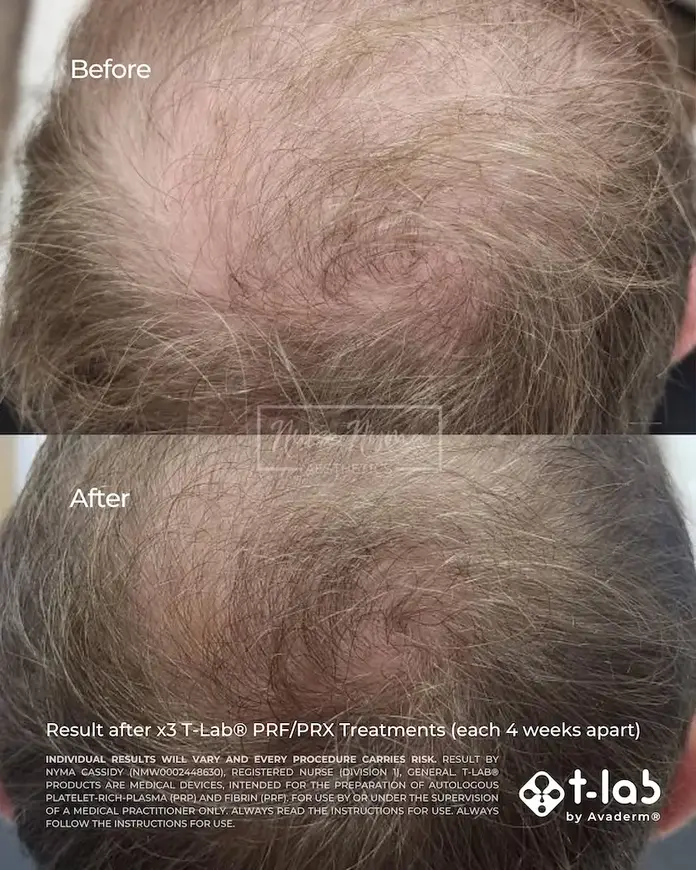
Disclaimer: These images reflect outcomes achieved through personalised treatment plans created following a detailed consultation. Images have been shared by our clinical partners and are used with their permission.
Stress and temporary shedding
A period of significant physical or emotional stress can sometimes trigger a form of temporary shedding called telogen effluvium.
The timing isn’t always obvious. Increased shedding can begin two or three months after a trigger, so you may not immediately connect what you’re seeing now with an illness, operation, major life event or period of stress that happened earlier.
Telogen effluvium tends to cause more widespread sudden and heavy shedding. You may find hair in excess on brushes, pillows, or in the shower drain, or overall thinning across the scalp.
Nutrition and deficiencies
Hair follicles need adequate nutrition to function normally, so deficiencies can sometimes contribute to hair loss such as:
- Low iron – reduces the oxygen supply carried by red blood cells to hair follicles, stalling growth
- Vitamin D – low levels disrupt hair follicle cycling and are linked to both excessive shedding and patchy hair loss
- B Vitamins (B12 and Folate) – inadequate intake impairs red blood cell formation and cellular division required for healthy follicles.
- Zinc – deficiency disrupts tissue repair and keratin production, leading to brittle strands and thinning
- Inadequate proteins and calories – severe dietary restriction starves hair follicles of the raw building blocks needed for growth.
Over-supplementation carries risks as well. Taking high doses of some nutrients, especially vitamin A, vitamin E, and selenium, can paradoxically trigger or worsen hair loss.
Medical conditions and medications
Hair loss in men can be triggered by medical conditions like alopecia areata as well as various prescription drugs.
Alopecia areata is an autoimmune disease where the body attacks its own hair follicles, creating smooth, round bald patches on the scalp or beard.
Blood thinners, antidepressants, and blood pressure medications can cause hair to fall out, thin, or enter a resting phase halting new growth.
How to Prevent Hair Loss in Men
Not all male hair loss can be prevented, especially when genetics are involved—but men can take steps to protect the hair they have and reduce avoidable damage. Practical measures include avoiding ongoing tension on the hair (loose styling rather than tight pulling), being gentle with heat and chemical processing to prevent breakage, and supporting hair health through a balanced diet with adequate protein, vitamins and minerals.
If you notice changes in your hair, a receding hairline, more visible scalp, thinning around the crown, or more shedding than usual, take note of them, but don’t panic. Get to know what’s normal for your hair so you can recognise when something changes, and pay attention to how any changes develop over time.
If you experience sudden or patchy hair loss, significant unexplained shedding, or any scalp redness, scaling, pain or irritation, book an appointment with your GP or another qualified health professional, as these signs may need medical investigation
What cosmetic treatment options may be considered for male hair loss?
Hair loss is one of several concerns men address with cosmetic treatment, and the right approach depends on what’s causing the loss, how far it has progressed, your health history and what you’re comfortable with.
Depending on the diagnosis, a medical professional may discuss scalp microneedling with exosomes or PRF treatment where clinically appropriate. Suitability depends on factors such as your pattern and progression of thinning, general health and the condition of the existing hair follicles.
No approach can guarantee new hair growth or a particular result. Your clinician should explain what an option involves, its limitations and possible risks before you decide whether to proceed.
Your Next Step
Choosing whether men’s cosmetic treatments are right for you is a personal
decision. If you’d like to explore your options, understand what may suit your features,
or simply ask questions, our medical professionals are here to guide you with clarity and care.
A $100 deposit is required to secure an appointment. Full amount is completely redeemable or refundable if you decide not to go ahead with the treatment.
Professional standards at Luxe Lips
At Luxe Lips, a cosmetic clinic in Melbourne, our care is grounded in medical ethics and clinical responsibility. Every treatment pathway is approached as a medical process, with established health protocols and safety guiding each step.
Across our clinics in Moonee Ponds, Camberwell, and Brighton, our medical professionals carry out a thorough screening process for every person. For men considering cosmetic treatments, this includes reviewing medical history, assessing anatomical suitability, and considering psychological readiness. In line with local guidelines, this evaluation helps determine whether a proposed plan aligns with your health.
Medical professionals proceed only when a treatment is clinically appropriate. If your underlying concern, the condition of the surrounding skin, or your broader health profile means treatment is not the right fit, we will explain why and discuss what that means for you. The focus is always on clear information and maintaining a clinical environment where safety and ethical standards come first.
Because responses and circumstances vary, a consultation is required to determine suitability before men’s cosmetic treatments are considered.
Frequently asked questions about causes of hair loss
It depends on the cause. Temporary shedding from stress, illness or a nutritional deficiency, known as telogen effluvium, usually reverses once the trigger resolves, and hair regrows over several months.
Genetic hair loss is another matter. Male pattern hair loss is progressive and doesn’t reverse on its own, though the pace varies. Once follicles have miniaturised past a certain point, they stop producing hair. This is why timing matters: earlier changes tend to have more options than advanced loss.
The pattern is the biggest clue. Genetic hair loss tends to follow a predictable path, a receding hairline at the temples, thinning at the crown, or both, and develops gradually over months or years.
Non-genetic causes usually look different. Sudden or heavy shedding across the whole scalp points to stress or illness. Smooth, round bald patches suggest an autoimmune cause. Redness, scaling or pain isn’t typical of pattern loss. A professional assessment can confirm what’s behind it.
No. Wearing hats doesn’t cause hair loss. Normal headwear doesn’t affect the follicles or the processes that drive thinning.
The only related risk is very tight, constant tension on the hair over long periods, which can stress follicles, but that comes from tight hairstyles rather than a cap. A hat worn normally, even daily, won’t thin your hair or accelerate genetic hair loss. If you’re shedding, the cause lies elsewhere.
No. Washing your hair, even daily, doesn’t cause hair loss. The hairs you see in the drain are ones already in their natural shedding phase, not hair pulled out by washing.
Shampooing removes loose hairs that were going to fall anyway, so it can look like washing is the cause when it isn’t. Aggressive scrubbing or harsh products may cause breakage over time, but that’s different from the follicle-level process behind genuine hair loss.
Not always. Male pattern hair loss is usually gradual and follows a recognisable pattern, but other causes don’t.
Telogen effluvium can bring sudden, widespread shedding two to three months after a trigger. Alopecia areata can create bald patches quickly and without warning. Speed and pattern are useful signals: gradual and patterned points toward genetics, while sudden, patchy or diffuse shedding suggests another cause worth investigating.